Featured guide
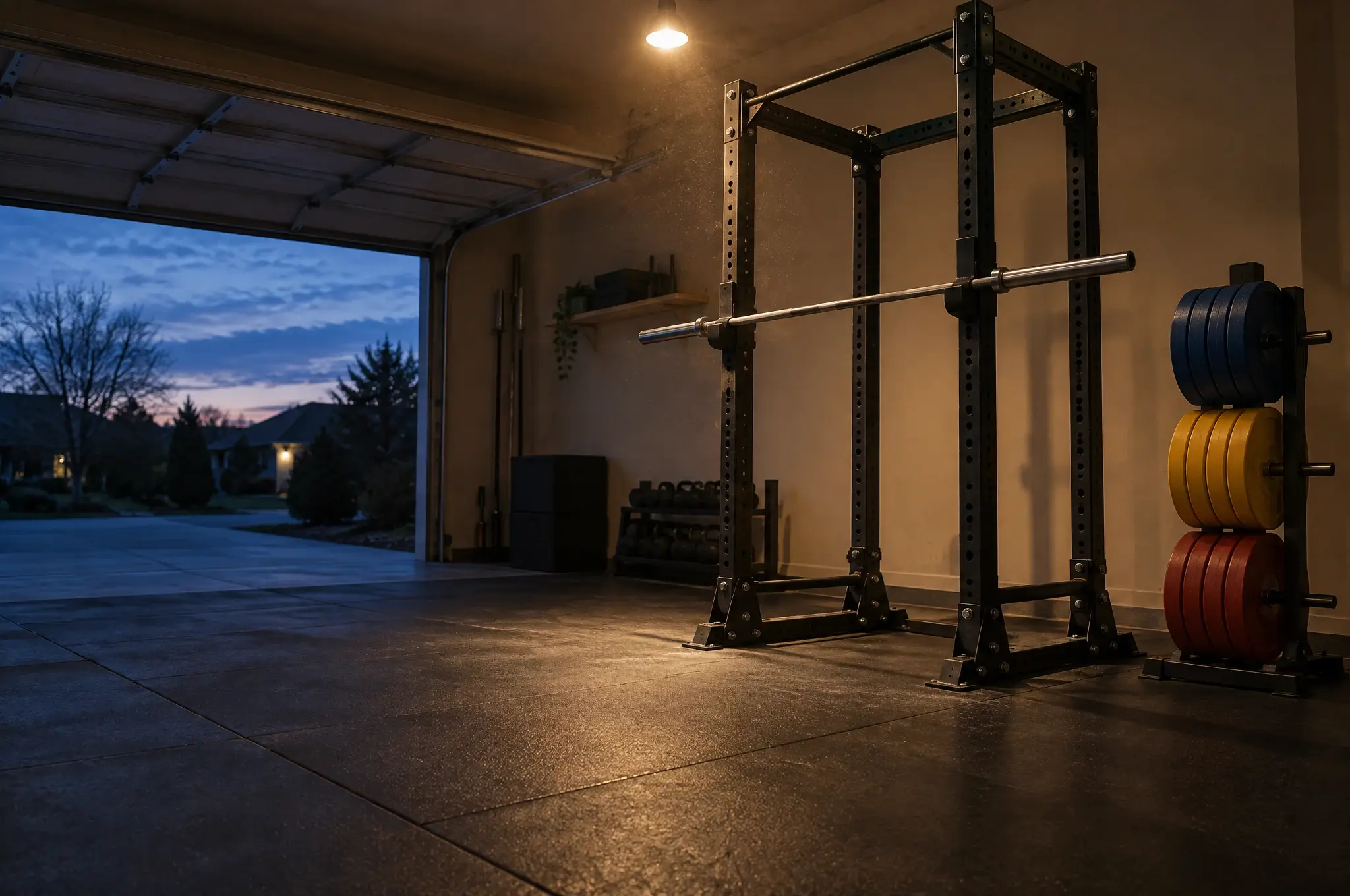
The 10 Best Power Racks of 2026: Compared & Ranked
Which racks fit under an 8 ft ceiling, which take a lat pulldown, and who should skip the expensive ones. Every spec linked to the maker's own page.
Read the guide
Buying guides and set-up help for garages, basements and spare rooms, built from maker specs, warranty terms and owner reports, with every source listed.
Featured guide
Which racks fit under an 8 ft ceiling, which take a lat pulldown, and who should skip the expensive ones. Every spec linked to the maker's own page.
Read the guideThe buying guides most home gyms begin with.
 The best power racks for a home gymFootprint, ceiling height and attachments across the racks people actually buy.
 The best gym flooring for a garageStall mats, tiles and rolls by thickness, weight and cost per square foot.
 The best adjustable dumbbellsWeight range, jump size and how each locking system holds up for owners.
 The best treadmills for homeDeck size, motor rating, incline range and folded footprint side by side.
 The best rowing machinesAir, water and magnetic rowers, and how much floor each one needs.
 The best spin bikesFlywheel type, resistance, fit range and what the subscription really costs.
Starting points in the order most people buy. Prices move weekly, so the guides carry the current numbers.
The next guides on the list. Showing all 10.
| Entry | Type | Category | Status |
|---|---|---|---|
| Power racks | Roundup | Racks | Planned |
| REP PR-5000 power rack | Review | Racks | Planned |
| Titan X-3 power rack | Review | Racks | Planned |
| Rogue Monster rack | Review | Racks | Planned |
| Smith machines | Roundup | Racks | Planned |
| Gym mats | Roundup | Flooring | Planned |
| Rubber flooring for garages | Roundup | Flooring | Planned |
| Installing interlocking tiles | Guide | Flooring | Planned |
| Major Fitness F22 home gym | Review | Racks | Planned |
| Sole F80 treadmill | Review | Treadmills | Planned |
Seventeen areas, from the rack to the recovery shake.
Four rules, applied to every guide. No hands-on testing, just careful sourcing, stated plainly.
Read the full methodMaker spec sheets, manuals and warranty pages come first, then owner reports. Every claim links to where it came from.
The same six criteria on every page, averaged. It is a research score, never a test result.
If only prices changed, the page says so. "Updated" means the content was actually rechecked.
Prices checked
Some links pay us a commission. It never moves a score, and the note sits above the first link on the page.
We may earn a commission if you buy through links on this page. It doesn't change our picks.
Dosage, timing and safety drawn from published research, not from the label.
What we cite
General information, not medical advice.
Four measurements in inches. The checker works out rack clearance, overhead-press room and pull-up headroom. Nothing is stored or sent.
For a rack, barbell and bench, plan on at least a 10 by 10 ft floor area. A standard 20 kg Olympic bar is 2.2 m (about 7.2 ft) long, so leave room at both ends to load plates. A dumbbell-and-bench setup needs far less, often just a corner of a spare room.
Add the rack’s listed height, your flooring, and room for pull-ups and overhead presses. Many full-size racks stand around 7 to 8 ft tall, so a standard 8 ft ceiling can be tight. The fit checker on this page does the sums with your own measurements.
A typical concrete garage slab carries a rack and plates without trouble. Lay 3/4 in rubber stall mats to protect the concrete and your plates. If you will drop weights from overhead, a lifting platform spreads the impact.
Adjustable dumbbells replace a whole rack of fixed pairs in a small footprint, which suits spare rooms. Fixed dumbbells are faster to switch between and harder to break, but a full set costs more and takes far more space.
If you lift anything heavier than your bodyweight, yes. Rubber protects the floor and the equipment, cuts noise, and stops racks from sliding. Horse-stall mats about 3/4 in thick are the common low-cost choice.
No. Every guide is built from maker specs, manuals, warranty terms and owner reports, and lists its sources. Pages say “Researched, not tested” so that is always clear.